***ESPAÑOL ABAJO***
#bus #lima #travel
The experience of getting the bus in Lima is very different to that in Europe. Where do I start…
I will begin by sharing a vital piece of information which I have only just found out which is that the buses belong to private companies, not to the government. This explained all the things which I struggled to fathom during my first bus journeys.
First of all, there are no timetables. You just go and wait until a bus going to your destination comes by. And the best way to know where you must catch that bus is via an application called «TuRuta». You just say where you’re leaving from and type in your destination and the app shows you which bus you can take, with a photo of the bus and where you can catch it.
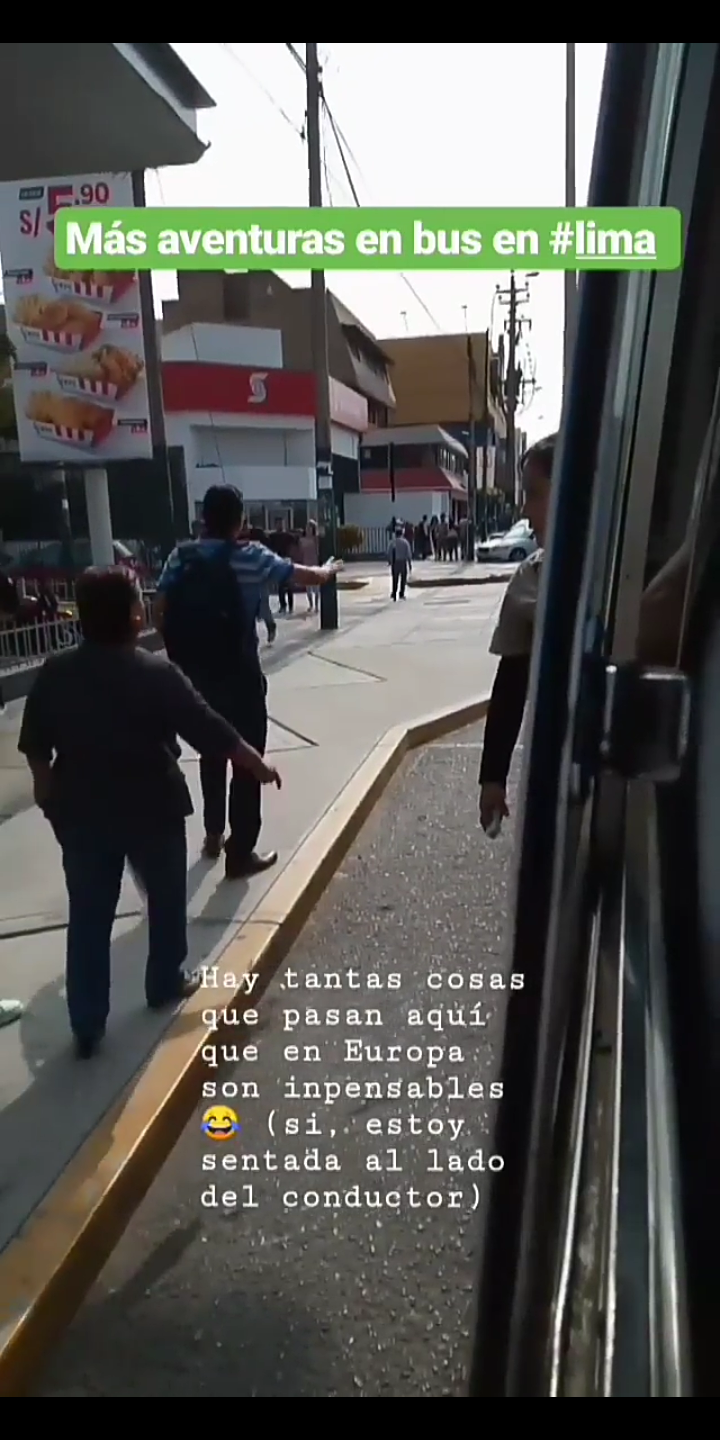
Secondly, all the buses have a man or woman who the passengers pay their fare to and who are also in charge of shouting out the destinations. Literally, they shout out of the bus at every chance and every stop where people are waiting for a bus. They even step out of the bus and stay where the door is open whilst they shout out.
Thirdly, there is a passenger seat directly next to the driver. The third time I went on the bus to uni I had to sit on this seat. I could not believe everything I was experiencing. The driver, who had butterfly lip, was beeping his horn using the conductors of the cables, which were entwined around the gear stick. He beeped a lot (which all the drivers do, something I still haven’t understood), so sometimes the conductors got stuck in contact and the beep sounded longer and he had to separate them again.
Also, there are men who stand on the streets where the buses run and jot down the numbers of all the buses which are going in the same direction and the respective distances between each bus line. Then, they hand a little note with these numbers to the bus driver who then gives them a few cents. This puzzled me until I understood the exchange. The bus watcher was telling the driver how much time he had to pick up as many passengers as possible before the other buses.
To add to this last point, I’ve noticed how the driver will accelerate and take over another bus if he sees that it is going in the same direction as he is. It is basically a competition to get the most passengers.

Imagine being in a bus, sat in the passenger seat, the driver beeping all the time, every now and again paying men who come up to the window to hand in a piece of paper with numbers written on it in exchange for some cents, a man/woman shouting out all the destinations, cramped up passengers, tall men with their heads outside the windows because the bus is too small to stand up straight, a random ice cream dealer coming on to sell to people on the bus and people eating on the bus.
All this would be unthinkable of in Europe! This is why I hear two voices in my head when I go on the bus in Lima. My European voice says, «I can’t believe this is happening» and my traveler voice says, «Relax, this is how it’s done here. You can adapt» . It really is a culture shock and it is the cheapest fare ever at just 2 soles (=0,50c).
I’ve heard stories of people stealing mobiles from the bus windows or inside the bus they grab it and run out at a stop. Also I’ve been told about people using knives to open your bag to get into it without opening any zips so you don’t feel any struggle. For these reasons it’s best to wear your bag on your chest rather than your back if you’re stood up and put your phone away any time you really don’t need it.
If you find yourself in this kind of situation, don’t let it frighten you, it’s not that bad. It’s just like any time you’re out where there are people from all different backgrounds, you must be alert. Enjoy the ride with your senses tuned in.
Sofia x
.
.
.
Montar el bus en Lima
La experiencia de coger el autobús en Lima es muy diferente a la de Europa. Por dónde empiezo…
Comenzaré compartiendo una información vital que acabo de descubrir, que los autobuses pertenecen a empresas privadas, no al gobierno. Esto explica todas las cosas que no comprendía durante mis primeros viajes en autobús.
En primer lugar, no hay horarios. Simplemente ve y espera hasta que llegue un autobús que va a tu destino. Y la mejor manera de saber dónde debes coger ese bus es a través de una aplicación llamada «TuRuta». Simplemente pones desde dónde sales y escribes el destino y la aplicación te muestra qué autobús puedes tomar, con una foto del autobús y te indica dónde puedes tomarlo.
En segundo lugar, todos los autobuses tienen un hombre o una mujer a quienes los pasajeros pagan sus tarifas y también están a cargo de gritar los destinos. Literalmente, gritan fuera del autobús en cada oportunidad y en cada parada donde la gente está esperando un autobús. Incluso salen del autobús y se quedan donde está abierta la puerta mientras gritan.
En tercer lugar, hay un asiento del pasajero directamente al lado del conductor. La tercera vez que fui en el autobús a la universidad tuve que sentarme en este asiento. No podía creer todo lo que estaba viviendo. El conductor, que tenía labio de mariposa, estaba sonando su bocina usando los conductores de los cables, que estaban entrelazados alrededor de la palanca de cambios. La sonó mucho (lo que hacen todos los conductores, algo que todavía no he entendido), por lo que a veces los conductores se atascaron y el pitido sonó más largo de lo normal y tuvo que separarlos nuevamente.
También, hay hombres que se paran en las calles donde los autobuses corren y anotan los números de todos los autobuses que van en la misma dirección y las respectivas distancias entre cada línea de autobús. Luego, entregan una notita con estos números al conductor del autobús, quien les da unos centavos. Esto me desconcertó hasta que entendí el intercambio. El vigilante del autobús le estaba diciendo al conductor cuánto tiempo tenía para recoger tantos pasajeros como fuera posible antes que los otros autobuses.
Para agregar a este último punto, he notado cómo el conductor se acelera y adelanta al otro autobús si ve que va en la misma dirección que él. Es básicamente una competencia para obtener la mayor cantidad de pasajeros.
Imagínate estar en un autobús, sentado en el asiento del pasajero, el conductor pitando todo el tiempo, pagando de vez en cuando a los hombres que se acercan a la ventana para entregar un pedazo de papel con números escritos a cambio de dinero, un hombre / mujer gritando todos los destinos, pasajeros apretados, hombres altos con sus cabezas fuera de las ventanas porque el autobús es demasiado pequeño para estar derecho, un comerciante de helados al azar viene a vender a las personas en el autobús y gente comiendo en el bus.
¡Todo esto sería impensable en Europa! Por eso escucho dos voces en mi cabeza cuando voy en el autobús en Lima. Mi voz europea dice: «No puedo creer que esto está pasando» y la voz de viajera dice: «Relájate, así es como se hace aquí. Puedes adaptarte». Realmente es un choque cultural y es la tarifa más barata que he visto de solo 2 soles (= 0,50c).
He escuchado historias de personas que roban teléfonos móviles desde las ventanillas del autobús o dentro del autobús lo agarran y salen corriendo en una parada. También me han dicho que las personas usan cuchillos para abrir el bolso sin abrir ninguna cremallera para que no sientas ninguna dificultad. Por estas razones, es mejor que lleves el bolso o mochila en el pecho en lugar de la espalda si estás de pie y guarda el teléfono cuando no lo necesitas.
Si te encuentras en este tipo de situación, no te asustes, no es para tanto. Es como cualquier momento que te estés fuera donde haya personas de diferentes orígenes, debes estar alerta. Disfruta el viaje con tus sentidos sintonizados.
Sofia x
 Sofia's World